Market Volatility in 2026: Threat or Opportunity for Smart Investors?
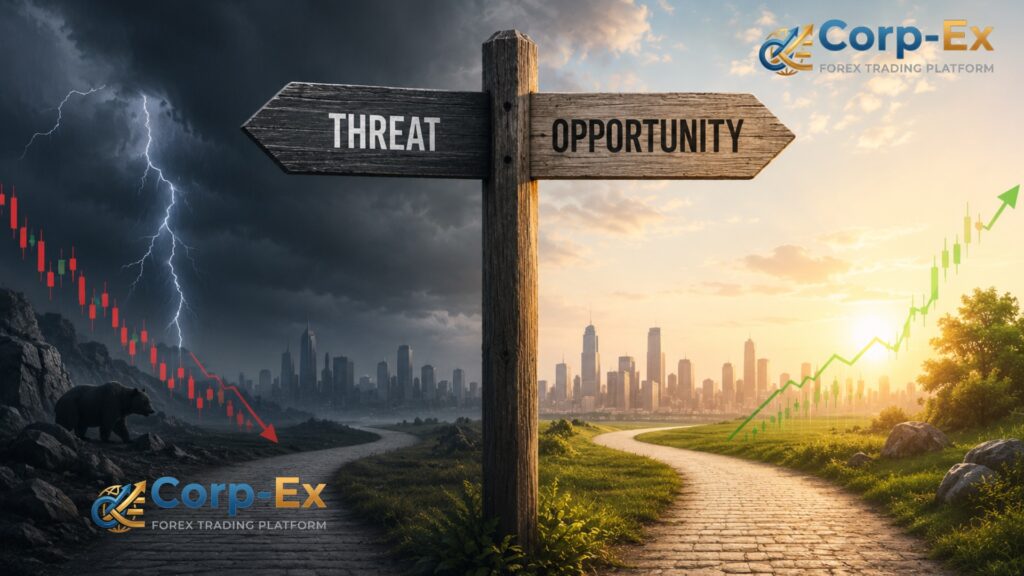
Market volatility is often portrayed as something investors should fear.
Sharp price swings, unexpected headlines, and sudden changes in investor sentiment can create uncertainty and anxiety. It’s not uncommon for investors to question their strategy when markets become unpredictable.
Yet history tells a different story.
Many of the greatest investment opportunities have emerged during periods of heightened volatility. While market turbulence can create short-term discomfort, experienced investors often view it as a normal—and sometimes beneficial—part of the investing process.
The key is understanding the difference between reacting emotionally and responding strategically.
What Is Market Volatility?
Volatility refers to the rate at which asset prices rise and fall over a given period.
A volatile market experiences larger and more frequent price movements than a stable one. These fluctuations can be caused by a variety of factors, including:
- Economic data releases
- Interest rate decisions
- Corporate earnings reports
- Geopolitical events
- Investor sentiment
- Technological and industry disruptions
While volatility is often associated with risk, it is important to remember that price movement itself is neither good nor bad.
Volatility creates both risks and opportunities.
Why Investors Fear Volatility
Human psychology plays a significant role in investing.
According to Morgan Housel, people tend to experience the pain of losses more intensely than the satisfaction of gains. This can lead investors to make emotional decisions during periods of uncertainty.
Common reactions include:
- Selling after prices have already fallen
- Abandoning long-term plans
- Chasing market trends
- Attempting to time the market
- Holding excessive amounts of cash out of fear
These behaviors often hurt long-term performance more than volatility itself.
In many cases, investors suffer not because markets become volatile, but because they respond impulsively to volatility.
Volatility Has Historically Created Opportunity
Looking back at financial history, some of the strongest market recoveries followed periods of significant uncertainty.
Market downturns have occurred during:
- Economic recessions
- Financial crises
- Global conflicts
- Public health emergencies
- Political uncertainty
Yet despite these challenges, markets have repeatedly demonstrated resilience over the long term.
This does not mean every investment recovers, nor does it eliminate risk. However, it highlights an important lesson: temporary market declines are often a normal part of investing rather than a signal that investing itself has failed.
The Importance of Perspective
Investors frequently focus on short-term market movements while overlooking their long-term objectives.
A stock declining 5% in a week may seem significant. Viewed over a period of five or ten years, that same movement may barely register. This is why maintaining perspective is critical.
Legendary investors often emphasize that successful investing is less about predicting tomorrow’s market movement and more about maintaining a disciplined process over time.
Short-term noise can distract investors from long-term goals.
Risk Management Matters More Than Prediction
One of the biggest misconceptions in investing is the belief that success comes from accurately predicting every market movement. In reality, many successful investors focus less on prediction and more on preparation.
This includes:
- Diversification
- Position sizing
- Portfolio monitoring
- Risk controls
- Regular portfolio reviews
As investor Howard Marks frequently points out, investing is not about certainty. It is about making informed decisions under conditions of uncertainty.
No one can eliminate risk entirely. The goal is to manage it intelligently.
Technology’s Role During Volatile Markets
Modern technology has changed how investors monitor and respond to market conditions.
Investors today can access:
- Real-time market data
- Portfolio performance analytics
- Risk management tools
- Market scanners
- Instant news and research
These tools can help investors make more informed decisions, particularly when markets are moving quickly. However, access to more information does not automatically lead to better outcomes.
The challenge is filtering signal from noise. Too much information can sometimes create confusion rather than clarity.
Staying Focused During Uncertain Times
Periods of market volatility often test an investor’s discipline. This is where having a structured investment process becomes valuable.
Many investors use tools that help them monitor performance, track portfolio changes, and review historical decisions rather than relying solely on emotion or headlines.
Platforms such as Corp-Ex provide access to features like account monitoring, performance tracking, trading history, and market analysis tools that can help investors maintain visibility over their portfolios during changing market conditions.
The objective is not to predict every market move but to stay informed and make decisions based on a clear process.
Volatility is often uncomfortable, but discomfort and danger are not always the same thing.
Markets will rise and fall. Headlines will create uncertainty. Investor sentiment will shift.
The investors who tend to succeed over the long term are often those who stay focused on their objectives while maintaining a disciplined approach through both good times and bad.
Whether markets are calm or volatile, having access to the right information can help you stay focused on your long-term objectives.
Corp-Ex provides investors with tools for account monitoring, performance tracking, market analysis, and portfolio visibility designed to help support informed decision-making.
Volatility may never feel comfortable. But for informed investors, it does not have to be feared.
Disclaimer: The information provided in this article is for educational and informational purposes only and should not be considered financial, investment, legal, or tax advice. Investing involves risk, including the possible loss of principal. Past performance does not guarantee future results. Readers should conduct their own research and consult qualified financial professionals before making investment decisions.